· By Susan Kim
Naturally Brewed vs. Chemically Made Soy Sauce: How to Tell the Difference
Quick answer
Naturally brewed soy sauce is made the traditional way: soybeans and wheat are fermented with koji mold and salt brine for months, which builds flavor slowly. “Chemically made” soy sauce – also called acid-hydrolyzed or HVP soy sauce – uses hydrochloric acid to break down soy protein in a matter of days, then often adds caramel color and corn syrup to imitate the taste and look. Check the label: look for “naturally brewed,” and watch for “hydrolyzed soy protein” or “hydrolyzed vegetable protein.”
If you’ve scrolled food videos lately, you’ve probably seen creators telling you to “throw away” certain soy sauces. The videos are dramatic, but they point to a real and useful question: how was your soy sauce actually made? Two bottles can look identical on the shelf and be produced in completely different ways. Here’s what the difference is, why it matters for flavor, and how to tell in five seconds by reading the label.
How naturally brewed soy sauce is made
Traditional soy sauce is a fermented food, much like wine, miso or cheese. The basic process looks like this:
- Make koji. Steamed soybeans are mixed with roasted, crushed wheat and inoculated with Aspergillus mold (koji).
- Add brine. The koji is mixed with salt water to form a mash called moromi.
- Ferment and age. Over months, enzymes break soy and wheat proteins into amino acids (the source of umami) and starches into sugars, while yeasts and lactic acid bacteria add aroma and complexity.
- Press, filter and pasteurize. The aged mash is pressed to release the liquid soy sauce.
The result is a sauce with layered, rounded savoriness – salty, yes, but also slightly sweet, toasty and aromatic. For a deeper dive, read How Is Soy Sauce Made?
How “chemically made” soy sauce is made
Chemically made soy sauce skips most of the fermentation. Defatted soy protein is broken down with hot hydrochloric acid (acid hydrolysis), which turns protein into amino acids in a matter of hours or days instead of months. The acid is then neutralized, and the liquid is usually adjusted with ingredients such as caramel color, corn syrup and salt to give it the color, sweetness and body that brewing would have created naturally.
The ingredient you’ll see on the label is hydrolyzed soy protein or hydrolyzed vegetable protein (HVP). Some products are blended – a mix of brewed soy sauce and acid-hydrolyzed protein – so the word “brewed” somewhere on the front isn’t always the whole story.
What about 3-MCPD and the “toxic soy sauce” videos?
Much of the online alarm traces back to a compound called 3-MCPD. According to the U.S. Food and Drug Administration, 3-MCPD can form when hydrochloric acid reacts with residual fat in the protein during acid hydrolysis – which is why it is associated with acid-hydrolyzed protein and the sauces made with it. The FDA has set a guidance level of 1 part per million of 3-MCPD for acid-hydrolyzed protein and Asian-style sauces, and the European Union sets its own maximum levels for soy sauce and hydrolyzed vegetable protein.
In other words, regulators know about this issue and monitor it, and soy sauce sold legally is expected to meet these limits. You don’t need to panic about a bottle in your fridge. But if you’d simply prefer soy sauce made by fermentation rather than acid hydrolysis, the label gives you an easy way to choose.
Naturally brewed vs. chemically made: side by side
| Naturally brewed | Chemically made (acid-hydrolyzed) | |
|---|---|---|
| How it’s made | Koji mold, salt brine and time | Hydrochloric acid breaks down soy protein |
| Time | Typically months | Hours to days |
| Typical ingredients | Water, soybeans, wheat, salt (plus minor additions in some brands) | Hydrolyzed soy/vegetable protein, water, salt, caramel color, corn syrup |
| Flavor | Rounded, aromatic, layered umami | Sharper and saltier; sweetness and color often added |
| Label clue | “Naturally brewed” or “traditionally brewed” | “Hydrolyzed soy protein” or “hydrolyzed vegetable protein” |
How to read a soy sauce label in 5 seconds
- Look for “naturally brewed” on the front or in the ingredient statement.
- Scan the ingredients for “hydrolyzed.” Hydrolyzed soy protein or hydrolyzed vegetable protein means acid hydrolysis was used, at least in part.
- Check for caramel color and corn syrup. They’re common in chemically made and blended sauces to imitate the color and sweetness that brewing creates.
- Compare sodium per tablespoon. Regular soy sauce is often around 900–1,000 mg per tablespoon; less-sodium versions come in lower.
- Shorter is usually simpler. A brewed soy sauce doesn’t need a long list of flavor fixes.
Still deciding? Our guide to choosing the best soy sauce walks through types, sodium and uses.
How SANC is made
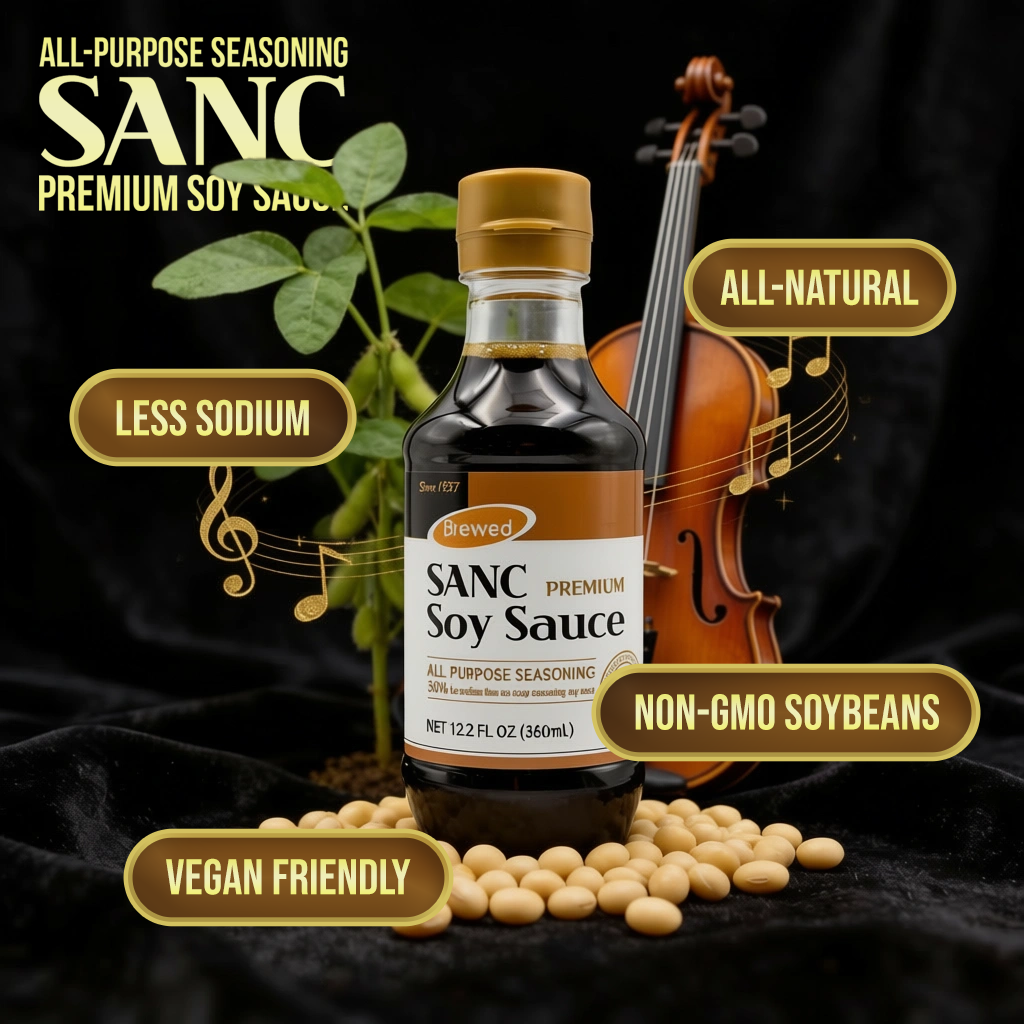
SANC Less Sodium Korean Soy Sauce is naturally brewed and aged for 6+ months using non-GMO soybeans – and, yes, our signature fermentation process plays classical music to the brewing soy sauce. It has about 720 mg of sodium per tablespoon and contains no high-fructose corn syrup. Here’s the full ingredient list, straight from the label: water, defatted soybeans, wheat, salt, alcohol, crystalline fructose, yeast extract, steviol glycosides and grapefruit extract. Learn more about our musically fermented process.
Taste the difference brewing makes
Naturally brewed, aged 6+ months, about 720 mg of sodium per tablespoon and no high-fructose corn syrup. Use it anywhere you use soy sauce – marinades, stir-fries, dipping sauces and even desserts.
Naturally Brewed Soy Sauce FAQ
What does “naturally brewed” mean on soy sauce?
It means the soy sauce was made by fermenting soybeans (and usually wheat) with koji mold and salt brine over time, rather than by breaking down soy protein with acid. Many brewed soy sauces say “naturally brewed” on the front label.
How can I tell if soy sauce is chemically made?
Read the ingredient list. “Hydrolyzed soy protein” or “hydrolyzed vegetable protein” indicates acid hydrolysis was used, at least in part. Caramel color and corn syrup are also common in chemically made and blended sauces.
Is chemically made soy sauce unsafe?
Soy sauce sold legally is expected to meet regulatory limits. The FDA has a guidance level of 1 ppm for 3-MCPD in acid-hydrolyzed protein and Asian-style sauces, and the EU sets maximum levels too. Many people choose naturally brewed soy sauce for its flavor and simpler process.
What is 3-MCPD?
3-MCPD (3-chloro-1,2-propanediol) is a compound that can form when hydrochloric acid reacts with residual fat during acid hydrolysis of protein. It is the reason regulators monitor acid-hydrolyzed protein and the sauces made with it.
Is SANC soy sauce naturally brewed?
Yes. SANC is naturally brewed and aged for 6+ months, with about 720 mg of sodium per tablespoon and no high-fructose corn syrup.
Is naturally brewed soy sauce gluten-free?
Not usually. Most naturally brewed soy sauce, including SANC, is made with wheat. Tamari and coconut aminos are common gluten-free alternatives.
Cooking with SANC? Share it on Instagram and tag @officialppmt1 and @officialppmt1_foodie – we love seeing what you make.