
· By Susan Kim
The Legend of Shige Maki
A burning castle. The wife of a slain samurai forced to flee her home. A quiet river town where she learns a new craft. Years of dedication leading to market domination. If this sounds like a great idea for a movie - you’re right! But it’s also the probably true story of Shige Maki and one of the biggest soy sauce brands today.

Pictured: a dark, gritty origin story
From Chinese jiang to Japanese shoyu
Soy sauce starts in China as jiang—high-salt fermented pastes and liquids based on grains, beans, meat, or fish. Over centuries, a grain-based version (using soybeans, wheat, etc.) became the direct ancestor of soy sauce.
Buddhist and Zen monks, and trade with China and Korea, eventually bring this salty paste to Japan. Cooks in Japan adapt the style by fermenting soybeans and produce miso. In the 13th-16th centuries, miso was being made in temple kitchens and estates. Different regions were experimenting with different techniques until eventually they shifted from thick pastes to an aromatic and pourable seasoning: shoyu.

Tradition! (image generated using traditional AI techniques)
The early 1600s in Japan saw the transition from the Sengoku (“Warring States”) period into the Edo period. This will be the end of over 150 years of civil war. But that doesn’t mean the fighting is over.
In 1614 Tokugawa Ieyasu lays siege to Osaka Castle, the final bastion of the Toyotomi clan. The fighting is brutal. Armies of samurais fighting and dying, the castle burns, and families tied to the Toyotomi are exiled or extinguished. The Siege of Osaka ends with the destruction of the Toyotomi and begins a 250-year period of Tokugawa rule.
But there is a survivor: Shige Maki, the wife of a slain samurai warlord.

What a powerful Act 1!
She escapes with her young son and flees east toward Edo (near modern-day Tokyo). She finally lands in Noda, a small village on the Edo River. She doesn’t know it yet, but with Noda’s river access, proximity to grain and salt, and suitable climate for fermentation, Shige Maki will help Noda become known as “soy sauce city.”
 "This city..."
Shige changes her family name to Mogi. She learns how to brew shoyu from other townspeople and proceeds to spend years refining the process. She works with soybeans, roasted wheat, koji mold, and barrel fermentation techniques.
She works and learns, brews and builds.
She starts to sell soy sauce as a commercial business, not just for use in her house.
She falls in love again (hopefully). She has more kids who also have kids. Her descendants follow in her footsteps, along with other families in Noda. What started as a small workshop balloons into a small industry. By the mid-1600s, Noda is known as a soy sauce center. The families brewed soy sauce specifically to sell along the river into Edo, creating a market in their wake.
 This could also be a good musical
Shige Maki was the spiritual founder of the Noda brewing tradition. Almost 300 years later in 1917, eight families from Noda came together to form Noda Shoyu Co. Ltd. Today that company is called Kikkoman, and they are one of the best selling soy sauce brands on the market.
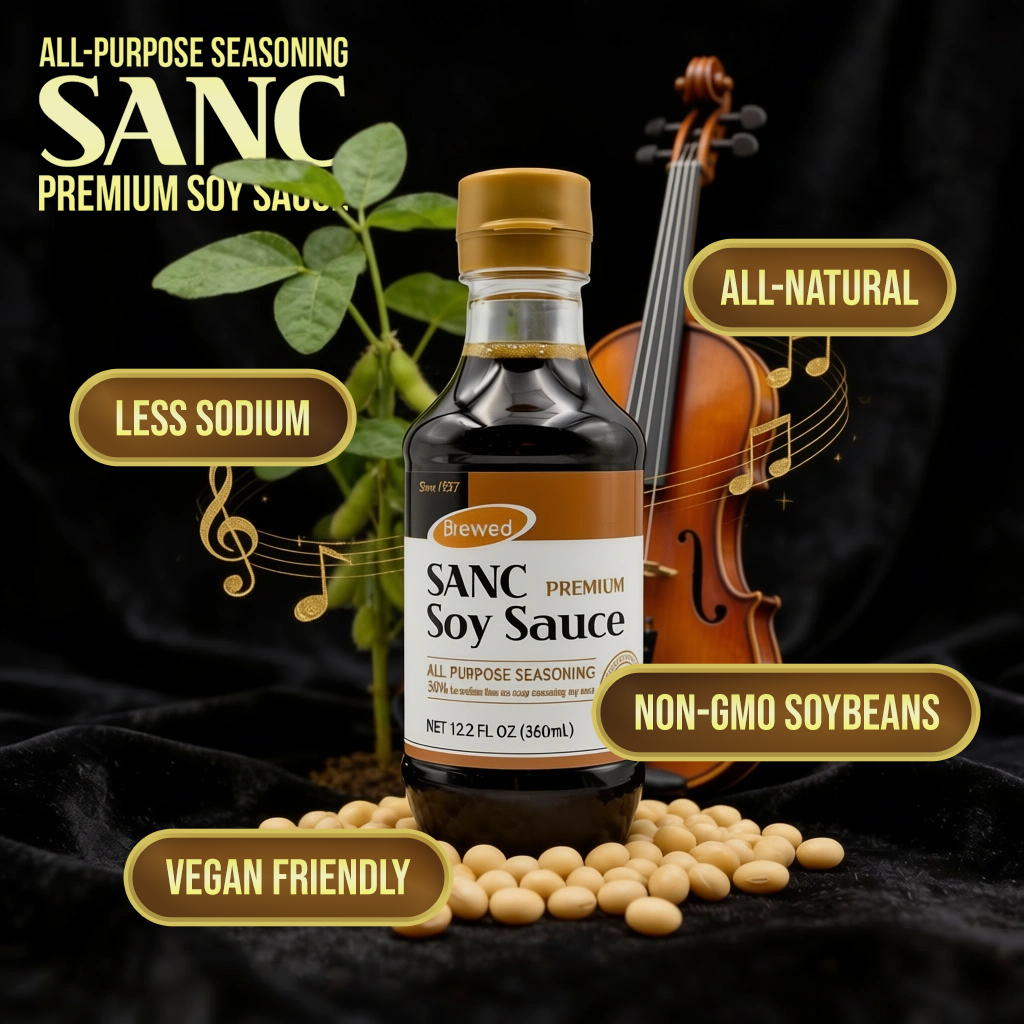
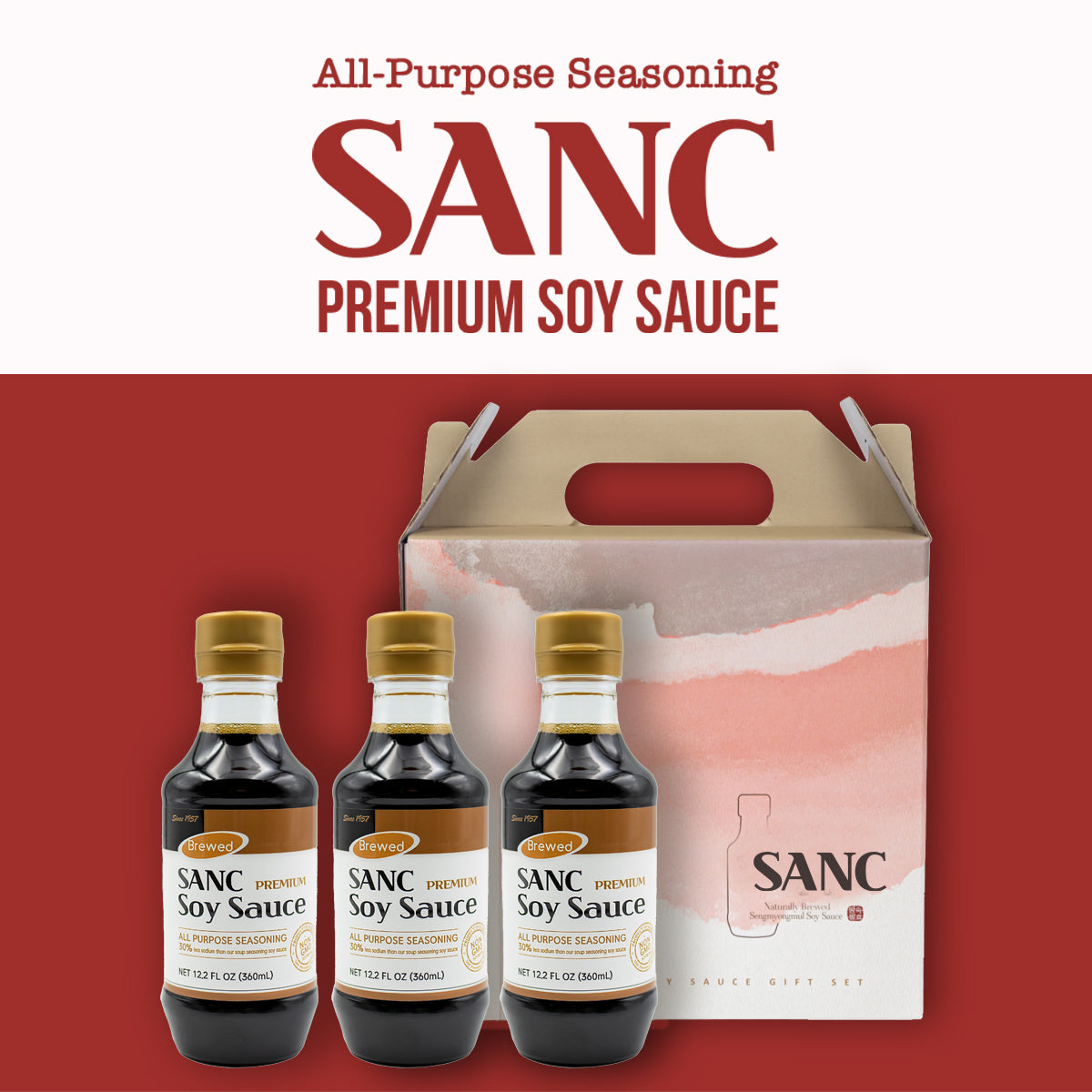
Kikkoman has a strong market presence. You've probably had it yourself! If you want to try something just as traditional, but with a modern twist, pick up a bottle of SANC. SANC is also naturally brewed, although in the Korean tradition, with an added dimension: music is piped into the fermentation tanks. This vibrates the sauce and leads to a richer, more umami-forward flavor.
 Music + soy sauce = SANC
Whether you want tried-and-true or something a little special, enjoy your soy sauce in moderation. While soy sauce does have some surprising health benefits, too much of a good thing (soy sauce) can leave you with too much sodium!