
· By Susan Kim
Did China Really Make Soy Sauce out of Human Hair?
If you spend enough time on the internet, you eventually stumble across a combination of words that can stop you in your scroll. An idea so outlandish it makes you pause and nauseously mutter to yourself, “There’s no way that’s real...”
Here is one such combination of words: “soy sauce made of human hair.”

There's no way that's real...
It might sound like an urban legend… but behind every legend is a grain (or soy bean) of truth.
_________________________________________________________________
 Shanghai, China
Picture early-2000s China. The economy is booming, cities are expanding, and there’s huge demand for cheap, quickly made food ingredients. Soy sauce is also everywhere – not just on tables, but as a backbone flavor in a ton of packaged foods.
Traditional soy sauce is slow and honestly kind of romantic: soybeans and wheat fermenting together for months, sometimes years, under careful watch. You can watch SANC soy sauce being brewed here, or you can watch one of my favorite relaxing youtube videos of soy sauce being made in a very traditional way here.

But there’s a shortcut version, too: you take protein, break it down with strong acid, neutralize it, doctor it up with salt, color, maybe some flavor, and boom – instant “amino acid syrup” that mimics some of soy sauce’s savory punch without all that fermentation time.
Now imagine a factory owner thinking:
“Protein is expensive. Surely there must be a better way!”
Unfortunately, there was a better way (depending on your definition of the word better). In what has to be one of the most stomach turning lightbulb moments in food history, the solution revealed itself: Human hair.

Dinner?
_________________________________________________________________
Hair is mostly protein (keratin). From a cold, chemistry-only perspective, it’s… not insane. If you boil any protein – soy, wheat, feathers, hair – in strong acid, you can break it down into amino acids. To a cost-cutting operator obsessed with margins, hair-derived protein seems less like “ick” and more like “free raw material.”

So in Hubei province, a company called Hubei Xinshengyuan Bio Engineering Company started collecting hair from barbershops, hospitals, and other sources, loading it into vats of acid (unwashed, if that even matters), and cooking it down. The result was a murky “amino acid solution” that could be sold cheaply to other companies as a base for sauce.
The system hummed along with barely a hair out of place until...
China’s state TV network, CCTV, ran an investigative segment. Viewers suddenly saw footage of exactly what no one ever wants to see in relation to anything they eat: piles of hair being shoveled around like garbage, workers stirring it into huge vats of liquid, the whole process being described as “edible amino acids” destined for the food supply.
Instant nightmare fuel.

_________________________________________________________________
The public reaction was exactly what you’d expect: outrage, disgust, and millions of people staring suspiciously at the bottle on their kitchen counter.
Officials moved quickly once it was exposed. The factory was shut down, and China explicitly banned the use of human hair for food amino acids and soy sauce production. The scandal joined the infamous hall of fame of “things that should never happen in food,” alongside gutter oil and fake baby formula.
Now here’s where the internet does its thing. Over the years, the story morphed as it traveled:
-
The original: a specific factory using human hair to produce amino acid solution for cheap soy-sauce-type products.
- The exaggerated version: “China makes soy sauce from human hair.”
Reality check:
Mainstream soy sauce brands are not out here simmering hair clippings. Most soy sauce you see – especially from well-known Chinese, Japanese, or Korean brands – is made from soybeans and wheat through fermentation, or from standard food-grade protein hydrolysates. The hair thing was a gross and very real scandal, but it was not the backbone of an entire national condiment industry.
Was it dangerous, beyond being completely disgusting? Potentially, yes.
Hair collected from salons, streets, or who-knows-where can carry heavy metals and pollutants. Acid won’t magically remove those; if anything, it can help extract them. On top of that, the acid-hydrolysis process itself can create unwanted byproducts like 3-MCPD, a contaminant linked in animal studies to kidney and reproductive issues when consumed in high amounts.
But don't get too comfortable... human hair has actually been used in food-related chemistry before. For years, a dough conditioner called L-cysteine – used in some breads – was often derived from human or hog hair before safer fermentation-based methods became common. So the “hair as a protein source” idea didn’t come from nowhere. This just took it to a whole new and completely unacceptable level.

_________________________________________________________________
Today, that scandal mainly lives on in blogs like this as a “did you know?” horror story for food nerds. Regulations were tightened. Factories like that one were shut down. Big producers are under far stricter scrutiny.
So what should you take away from all this?
-
Yes, the human-hair soy sauce story is rooted in a real incident.
-
No, it was not a standard practice across the entire soy sauce industry.
-
And no, your decent-brand soy sauce today is not secretly flavored with hair clippings.
If anything, the whole saga is a reminder that:
-
Regulation matters.
-
Transparency matters.
-
Traditional and healthy food-making techniques are always better than cost-cutting health-blind shortcuts.
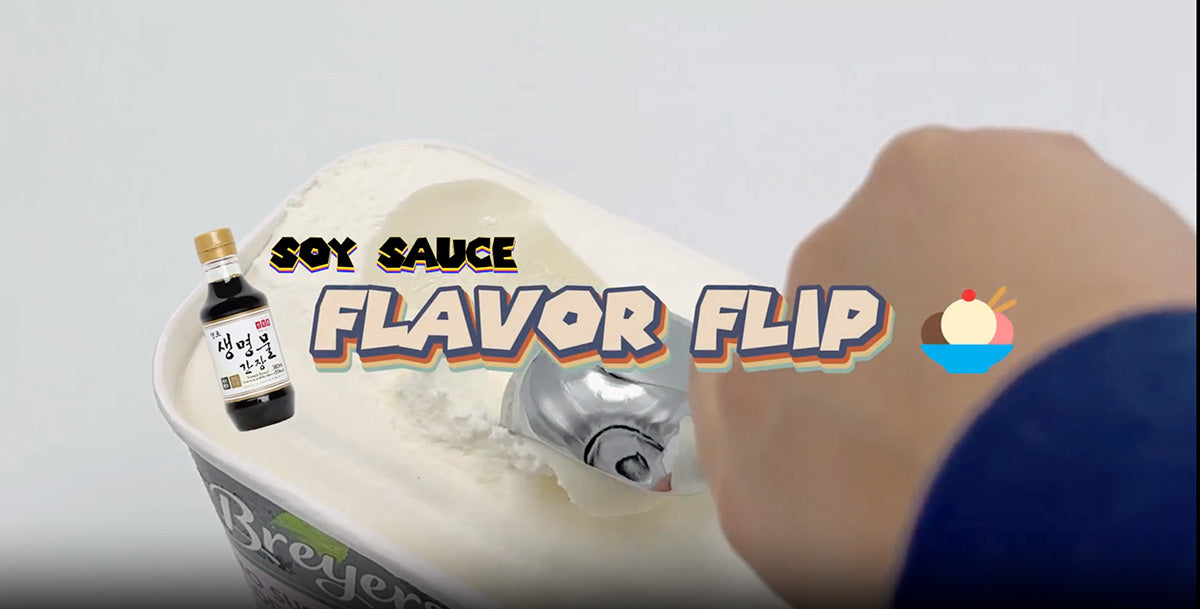
Next time you splash soy sauce onto your rice or stir-fry (or ice cream), you can enjoy the umami without feeling a little tickle in your throat.
And if you want to try soy sauce infused with music instead of hair, pick up a bottle of SANC right now!