· By Susan Kim
What Makes SANC Soy Sauce Different?
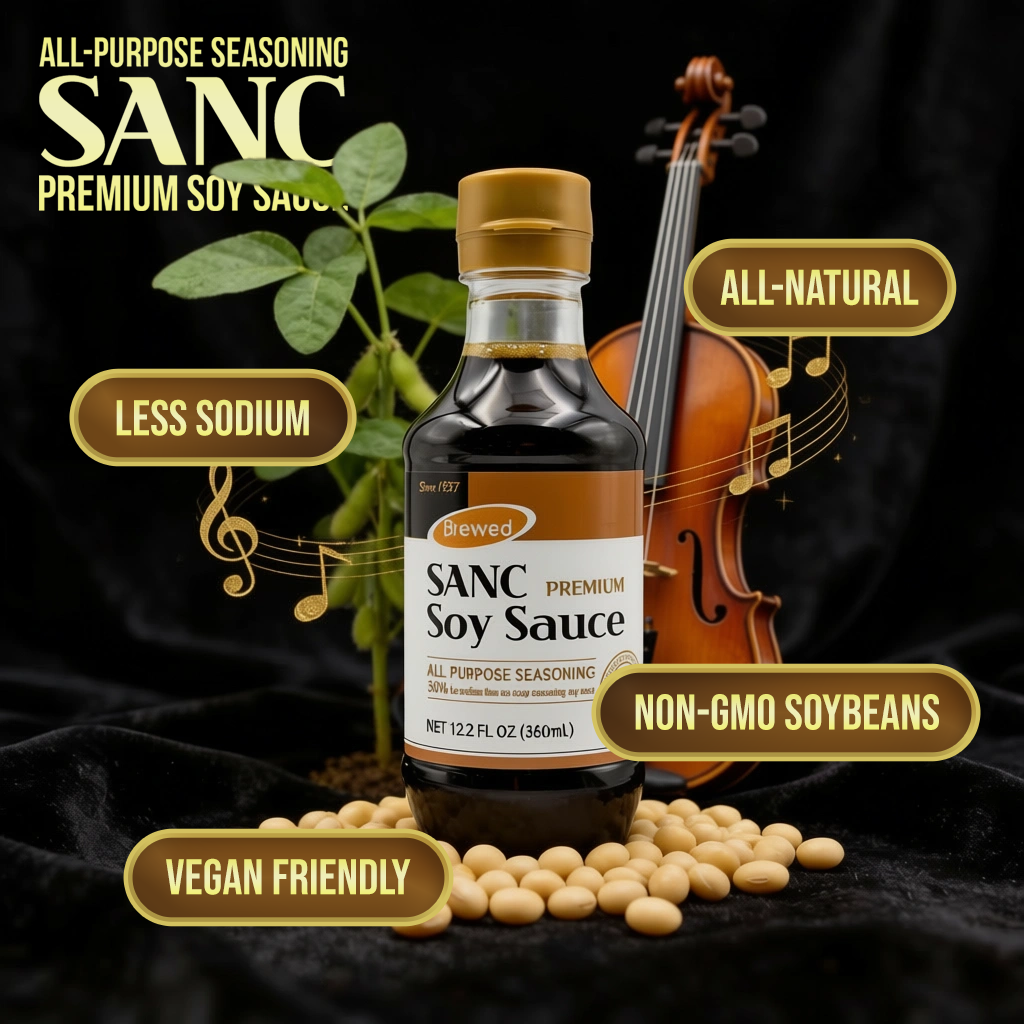
SANC is a naturally brewed Korean soy sauce made for everyday cooking. Its fermentation process includes continuous classical music, and its current upgraded recipe is made without high-fructose corn syrup.
Choosing a soy sauce comes down to its ingredients, flavor, sodium per serving, and how you plan to use it. Here is a straightforward look at SANC.
What is in the current upgraded recipe?
The current bottle label lists these ingredients:
- Water
- Defatted soybeans
- Wheat
- Salt
- Alcohol
- Crystalline fructose
- Yeast extract
- Steviol glycosides
- Grapefruit extract
SANC contains soy and wheat. It is not a gluten-free or soy-free substitute. Check the label on your bottle, especially if you have an allergy or are comparing an older recipe with the upgraded version.
“No high-fructose corn syrup” does not mean “no sweetening ingredients.” Crystalline fructose and steviol glycosides appear in the upgraded recipe’s ingredient list.
How is SANC fermented?
SANC describes its soy sauce as naturally brewed and aged for more than six months. Mozart’s classical music plays continuously during fermentation. This is part of the brand’s production story.
Learn more on our musical fermentation page. The process description should not be read as a claim that listening to music makes a food healthier.
How should you compare sodium?
SANC’s current label lists 720 mg sodium and 20 calories per 1 tablespoon (15 mL). There are about 24 servings per bottle.
Compare the sodium amount on each bottle’s Nutrition Facts label using the same serving size. A tablespoon is 15 mL. “Less sodium” is a comparison with another product or reference; it does not mean sodium-free.
The amount you pour also matters. Measure your soy sauce before adding it to a recipe, then taste before adding more seasoning. Use the label on your bottle for its sodium amount per serving.
How should you store SANC?
Store unopened SANC in a cool, dry place at room temperature and follow the best-if-used-by date printed on your bottle. Refrigerate after opening to maintain quality. For best quality, use within six months after opening.
What can you cook with SANC?
Use SANC in marinades, dipping sauces, rice bowls, noodles, and vegetable dishes. It also works in recipes beyond Korean cooking.
- Try our soy-sauce smash burgers.
- Explore soy sauce in pizza dough.
- Browse the SANC recipe collection.
Choose the bottle that fits your kitchen
See the current 12.2 fl oz bottle and ingredient details, explore the three-bottle set, or find a retailer.