
· By Susan Kim
The Science Behind Musical Fermentation

"What is a plant's favorite song?"
Indeed, a question that has plagued scientists, musicians, and jokebook writers for eons.
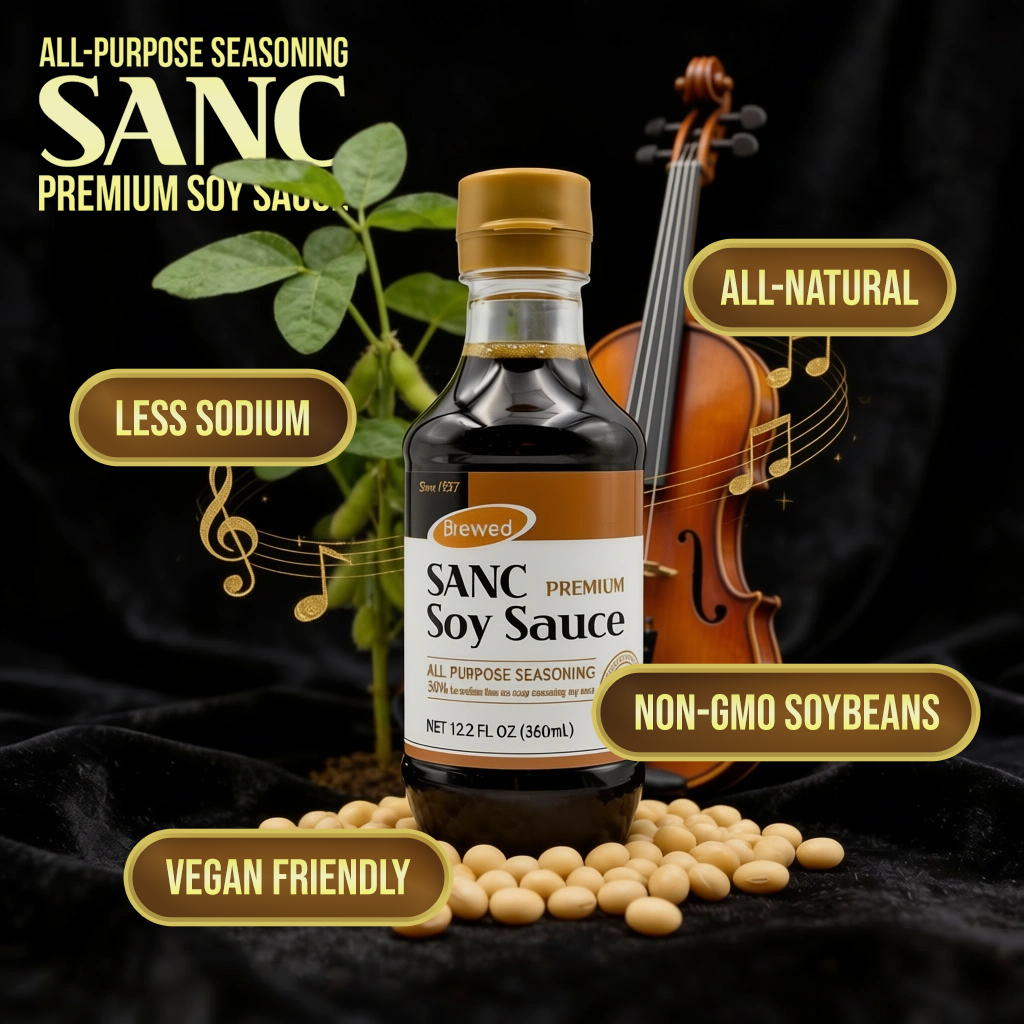
Well we here at SANC took it even one step further, putting our all-natural plant-derived sauce where our mouth is... turns out, it's tasty!
Musical fermentation is a key part of our production process. It might seem like magic, but by playing music into the soy sauce while it ferments, we are able to unlock and express a whole new dimension of flavor.
But... does it really have an effect?? (Yes.)
First, let me explain fermentation in the simplest way I can:
Fermentation is the process of yeast eating sugars and producing byproducts. We often ferment things on purpose because the results taste good and the byproducts are healthy. We're talking kimchi, yogurt, miso, sauerkraut, kombucha, and more. This is also how alcoholic beverages like beer are produced. But fermentation is a natural process and can happen out in the wild (or in the back of your fridge) too.
Okay, put on your thinking bibs, we're about to get scientific...
1. Music affects the process of fermentation:
Feast your mind on this scientific paper! When it comes to musical fermentation, this paper is a good place to start. It lays out a few simple discoveries: mostly, when exposed to "green sound" or classical music + nature sounds, the fermentation rate of yogurt bacteria increased. That is to say, music (or the vibrations) encourages the bacteria to process sugars sooner and faster. By the end of the process there were fewer viable bacteria left which also means they died more.
Basically music encourages fermenting bacteria to live fast and die hard, which is pretty rock and roll.

2. Sound affects the integrity of yeast and sugar
Here's an article about how ultrasound affects the cell walls of yeast and the structure of sugar. This source is talking about how ultrasound makes the cell walls of yeast more permeable (more sugars pass through) and helps break down the sugar molecules (sugar is easier to digest). The way this works is that there are tiny vacuum pockets in the peaks and valleys of the sound waves that collide with the yeast and sugar and have this effect.

It's true that we don't use ultrasound in SANC Premium Korean Soy Sauce - we just use regular ol' Mozart. But just like a small stream can cut a rock in half over time, we expose the soy sauce to music 24/7 for over six months.
3. Sound (energy) helps the yeast eat more sugar
Check out this interview with the founder of Sonor Wines, a winery that infuses their wine with music. The way he explains it, the energy from the sound (literally the vibrating motion of the wine) helps the yeast get exposed to all the sugar without using as much of its own energy as it normally would. Imagine little yeast bacteria surfing on the waves and eating up the sugar like Pac Man. In fact, that extra energy means the yeast can eat ALL of the sugar, exposing and developing richer flavors than otherwise. He also notes that at the end of the process there is less living yeast, just like the paper on yogurt bacteria found.

By the way, and not coincidentally, SANC Premium Soy Sauce has barely any sugar! Compare it with other major brands, and be amazed.
4. Different amounts of sound have different effects
This is a paper about sonication and its effects on the fermentation process for ethanol. This is about ultrasound again, but they discovered something interesting. They blasted their yeast with different amounts of sound over time. What they found was that a moderate amount of sound energy had the most profound effect on fermentation.
The Mythbusters also experimented with plants and sound. They discovered that being nice or being mean to plants makes the plants grow more than when they're left in silence. It's about the amount of sound!
That's why we choose Mozart to pump into the soy sauce. The sweeping dynamics of the music activates the yeast more!

Conclusion
So that was a lot of science (and a little bit of science on YouTube). But what it shows is that music and sound do have measurable effects on fermentation and plant processes.
And of course... you can taste it! Pick up a bottle of SANC today and taste the way music affects our sauce!

And stay tuned! Just like our sauce, Time is a crucial ingredient to our process, and over time we'll be coming up with clever ways to test our soy sauce and continue to show the effects of fermentation. If you have a good idea on how to test the effects of music on our fermenting soy sauce, drop us a comment!